On the night of October 24, 2026, Ukrainian drones struck the Tolyattikauchuk petrochemical plant in Tolyatti, Samara Oblast, Russia, triggering a large-scale fire. The attack — coordinated by Ukraine's Unmanned Systems Forces using FP-1 drones — is the latest in a long line of strikes that share one thing in common: the target was unprotected critical infrastructure, and the damage was severe.
For anyone responsible for the safety of a refinery, a fuel depot, a power station, or a military logistics site, the message is clear. Drones are no longer a secondary threat. They are the primary weapon against critical infrastructure — and the facilities that survive are the ones that plan for them.
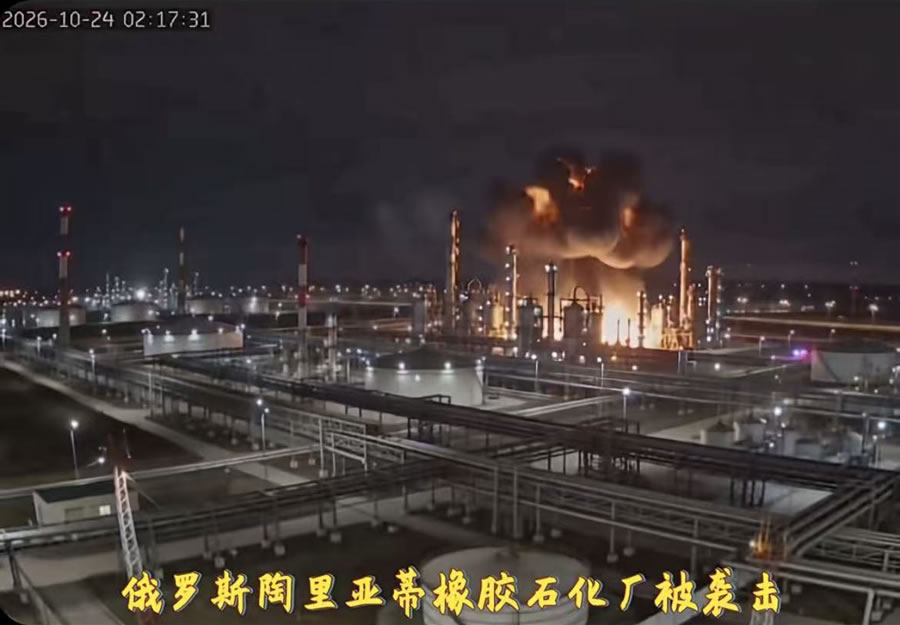
The Tolyattikauchuk plant produces roughly 260,000 tons of synthetic rubber per year — about 25% of Russia's domestic market. Its output has direct military value: butyl rubber goes into tires for military wheeled vehicles, and synthetic rubber is a key polymer component in solid rocket propellant for tactical and ballistic missiles.
That combination — high-volume, strategically important, and difficult to replace — made the plant a textbook high-value target. And it was hit.
The broader lesson applies far beyond one factory. If your site produces, stores, or processes materials of strategic or hazardous value, you should assume it is already on someone's target list.
The shift has happened for practical reasons. Modern FPV (first-person-view) and one-way attack drones are:
Against this, a facility's traditional perimeter — fences, cameras, guards — offers almost no protection. The threat comes from above.
Electronic countermeasures — radar, jamming, directed-energy weapons — play an important role, but they are expensive, complex to integrate, and can be degraded by countermeasures or simple volume of attack. They are also overkill, and over-budget, for many facilities.
Anti-drone nets are the opposite. They are a passive, always-on physical barrier:
• No electronics, no power, no signal — nothing to jam or hack.
• No operator required, no training curve.
• Low cost per square meter, and near-zero maintenance.
• Effective against both guided FPV drones and simple explosive-laden drones.
For most critical infrastructure, a net is not a replacement for electronic defense — it is the affordable first layer that catches what the electronics miss.
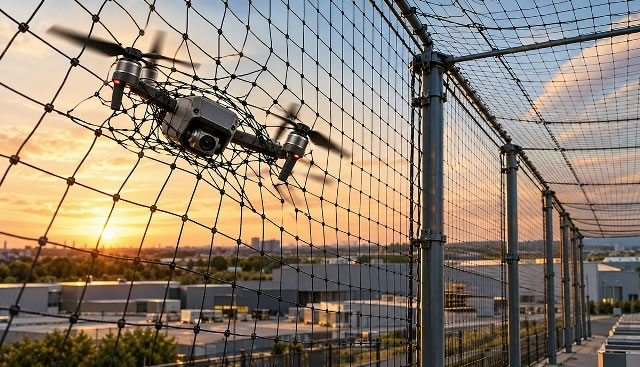
An anti-drone net (also called a drone defense net or UAV protection net) is a high-tensile wire mesh suspended over or around a protected asset. When a drone flies into it, the drone's rotors tangle in the mesh and it is captured, deflected, or stopped before it reaches its target.
The key is the material. Ordinary mesh will tear on impact. A proper anti-drone net uses high-tensile steel wire, engineered to absorb the energy of a fast-moving drone without failing, while keeping a mesh opening small enough that a drone cannot slip through.
Where anti-drone nets are deployed
Anti-drone netting is now installed around and above a wide range of assets, including:
• Petrochemical plants and refineries
• Fuel and oil storage depots
• Power stations, substations, and transformers
• Military logistics hubs and ammunition stores
• Airports and seaports
• Government and administrative buildings
• Warehouses and distribution centers
In each case, the net turns an easy, high-value target into one that is far more difficult to hit.
As a wire mesh manufacturer, XN Wire Mesh produces anti-drone netting engineered for exactly these threats:
• High-tensile steel wire that holds against impact without tearing.
• Corrosion-resistant finishes (galvanized or stainless) for long service life outdoors.
• Custom mesh size and panel dimensions to match the drones you expect to face and the structure you need to cover.
• Modular, quick-install design that can be deployed on new builds or retrofitted to existing facilities.
• Cost per square meter far below electronic countermeasures, so you can protect more area for less.
The attack on Tolyattikauchuk is not an isolated event. It is part of a pattern that is now repeating across conflict zones and high-risk regions. Facilities that rely on fences and guards alone are gambling with an asset they cannot easily rebuild.
Anti-drone netting does not replace a full security strategy — but it is the one layer that works passively, works every hour of every day, and works within a realistic budget. For a fraction of the cost of one failed raid, it can mean the difference between a near-miss and a catastrophic fire.
Protect what you can't afford to lose. Contact XN Wire Mesh today for anti-drone net specifications, custom sizing, and a quote for your facility.
 Anti-Drone Nets: The Cost-Effective Shield for Critical Infrastructure in Modern Conflict
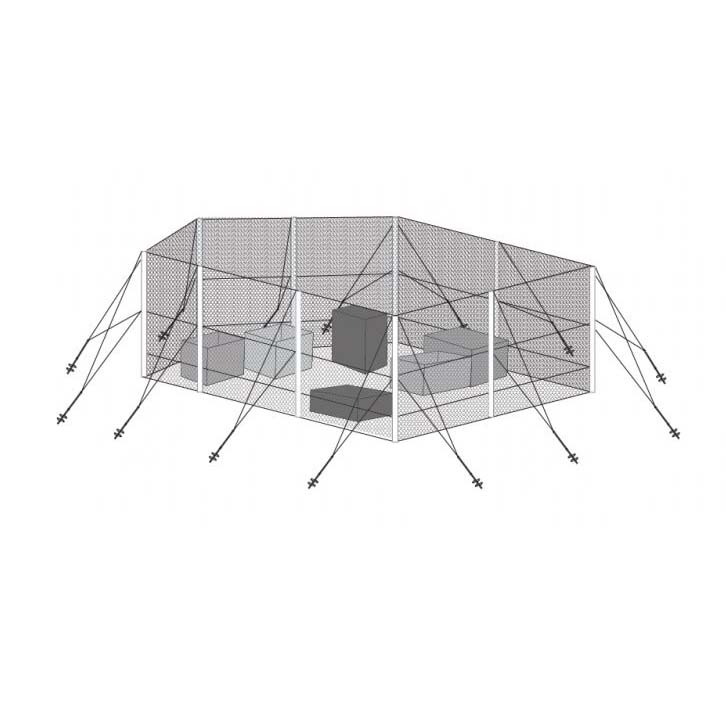 Stainless Steel Rope Net: The Premium Solution for Anti Drone Netting Applications
 How to Choose Lion Mesh: Practical Scenarios & Specification Recommendations
 Stainless Steel Cable Nets: The Ultimate Solution for Modern Zoo Enclosures