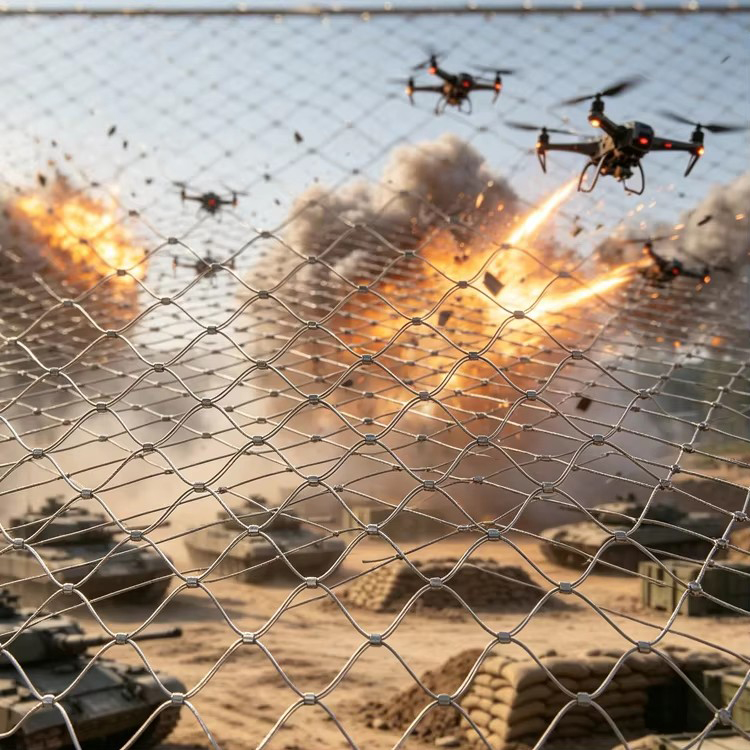
Passive Counter-UAS Protection

Stop unauthorized drones with anti-drone nets.

AeroNet net barriers physically entangle and ground rotor drones before they reach your runway, yard, or critical asset — no power, no electronics, no operator required.

UHMWPE & HDPE fiber UV-stabilized · 10+ yrs Custom mesh & sizes OEM available
5–50 mmMesh aperture, sized to drone class
1,800 kgfBreaking strength per strand (max)
−40…+80 °COperating temperature range
10+ yrsOutdoor service life, UV-stabilized
Overview

What are anti-drone nets?

Anti-drone nets are high-tenacity net barriers stretched across a perimeter, opening, or critical asset to physically stop unauthorized drones.

Unlike radar, jammers, or other electronic countermeasures, the net works purely by entanglement: a drone that flies into the mesh snags its rotors and hangs there, grounded. The flexible net absorbs the impact energy instead of relying on electronics to defeat the aircraft.

Because the system has no electronics and no moving parts, it is always on, impossible to jam, and safe to use near airports, fuel depots, and other sites where RF or laser emissions are restricted.

  • Always on — no power, no batteries, no operator
  • No emissions — safe near RF-sensitive and aviation environments
  • Low collateral — entangles and holds the drone rather than destroying it
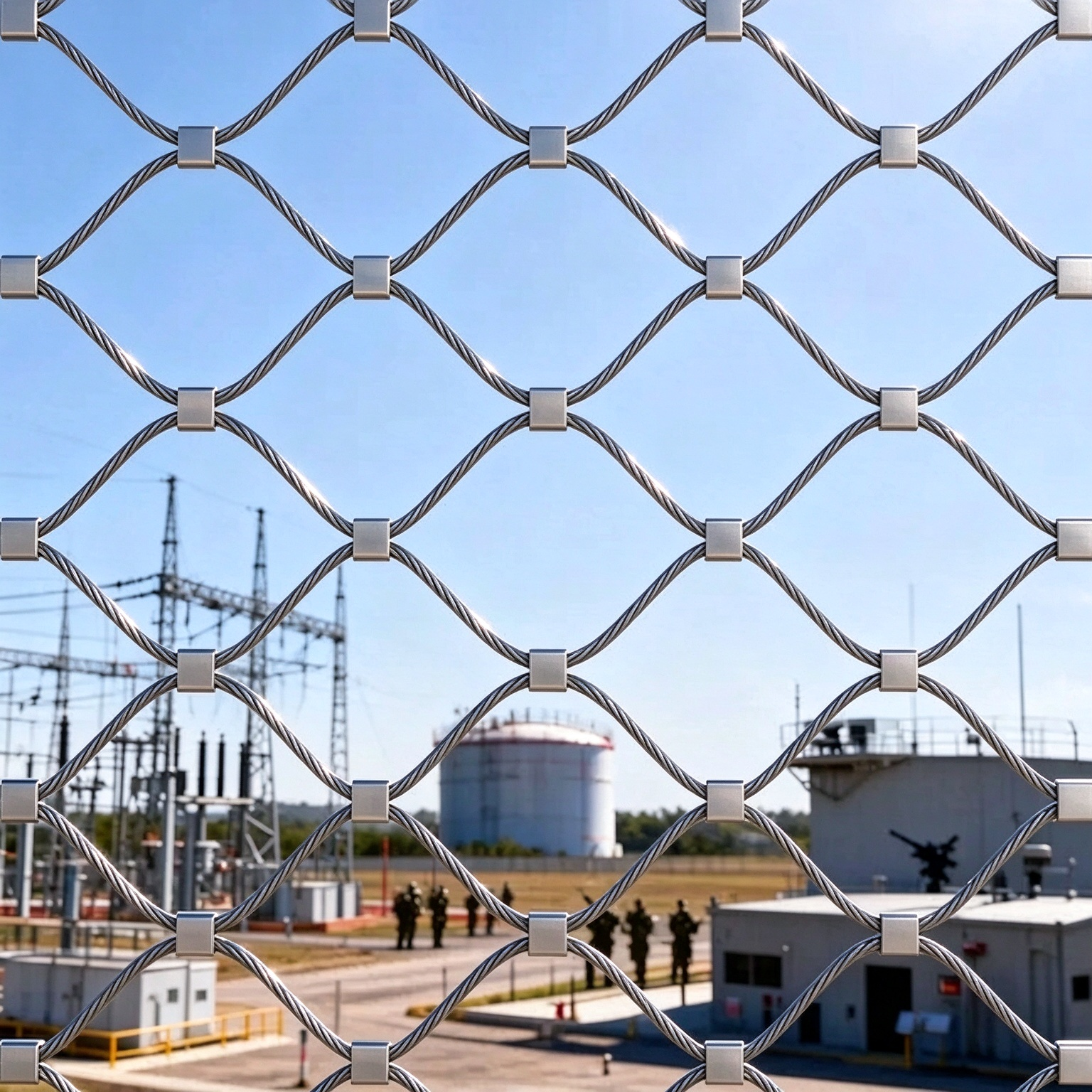
PROTECTED
1

Fly-in

A rotor drone approaches the protected perimeter or opening.

2

Snag

The rotors catch in the high-tenacity mesh; the flexible net absorbs the impact energy.

3

Entangle & ground

The drone is held suspended and immobilized before it reaches the asset.

Applications

Built for critical perimeters

From airports to substations, nets secure the airspace where a drone intrusion is unacceptable.

Airports & airfields

Guard runway approaches and hangars from rogue drones that endanger takeoffs and landings.

Prisons & detention

Stop contraband drops over yards, exercise areas, and cell blocks.

Military bases

Add a physical layer to a layered defense for camps, depots, and checkpoints.

Stadiums & events

Protect crowds and VIP areas during matches, concerts, and public events.

Power & substations

Shield transformers and switchyards from inspection or sabotage drones.

Data centers

Defend rooftop HVAC and perimeter airspace against reconnaissance.

Government & embassies

Create a discreet, always-on barrier for sensitive facilities.

Industrial & borders

Secure warehouses, ports, and long perimeter lines.

Materials

Engineered fiber for years outdoors

Every net is made to order from high-tenacity synthetic fibers, chosen for the threat level and climate of your site.

UHMWPE

Ultra-high-molecular-weight polyethylene. Up to 15× stronger than steel by weight, with low stretch and high abrasion resistance.

High strength

HDPE & Polyester

Cost-effective, UV-stable fibers for standard perimeters — good tensile strength and easy handling on site.

Economical

UV-stabilized

Fibers are treated against sunlight degradation and rated for 10+ years of continuous outdoor exposure.

Weatherproof

FR & conductive options

Flame-retardant and radar/electrically-conductive yarn options for sites with special requirements.

Optional

Construction: Edges are reinforced and spliced for load, in knotted or knotless construction. Netting is sewn and inspected to your order, and panels can be dyed to blend with the site or marked for visibility.

Specifications

Typical specifications

Every site is different. The values below are typical; we customize mesh, strength, color, and panel size to your threat model and drawings.

ParameterTypical value
MaterialUHMWPE, HDPE, Nylon, or Polyester
Mesh aperture5 mm – 50 mm (sized to target drone class)
Cord / rope diameter1.5 mm – 6 mm
Breaking strengthup to 1,800 kgf per strand
Panel sizeup to 6 m × 6 m (custom widths & lengths)
ColorBlack, green, tan, white (custom)
UV resistance10+ years outdoor (UV-stabilized)
Operating temperature−40 °C to +80 °C
Weightfrom ≈ 180 g/m² (varies by mesh)
OptionsFlame-retardant, conductive, camouflage

Full engineering datasheet and load calculations are provided with each quotation.

Application
Anti Drone Net Manufacturer

Anti Drone Net Manufacturer

Anti UAV Stainless Steel Rope

Anti UAV Stainless Steel Rope

Installation

Simple, low-maintenance installation

Lightweight panels install with basic tools. Most perimeters go up in days, not weeks, and need only visual inspection afterwards.

1

Site survey

Measure the perimeter or opening and confirm the drone approach direction and required clear height.

2

Anchors & posts

Set posts or anchors at planned intervals along the line to carry the load.

3

Run tension cables

String perimeter and diagonal cables to form a stable supporting grid.

4

Attach net panels

Secure each panel to the cables or frame with clips, lashing, or fasteners.

5

Tension & verify

Tension the mesh evenly, inspect seams and edges, and pull-test critical sections.

6

Maintain

Schedule periodic visual inspection; damaged panels are simple to patch or replace in place.

FAQ

Frequently asked questions

What size of drone can the nets stop?
Netting is sized to the target drone class. Mesh aperture and strand strength are matched to rotor diameter and weight — from small consumer quadcopters up to larger commercial UAVs. Send us the drone class you face and we will recommend the mesh.
Do the nets interfere with radio, GPS, or airport systems?
No. Anti-drone nets are entirely passive — no emissions, no electronics. They are safe to use near airports, fuel stores, and other RF-sensitive sites, and can be combined with radar, RF detection, or jammers for a layered defense.
How do the nets hold up in wind, sun, and snow?
Fibers are UV-stabilized for 10+ years of outdoor exposure and rated from −40 °C to +80 °C. Panels and supports are engineered for local wind and snow loads; we size the structure to your site.
Can the nets be made to our sizes and colors?
Yes — everything is made to order: mesh aperture, panel width and length, strand strength, color, and optional flame-retardant or conductive yarn. OEM and private-label production are available.
Do the nets hurt the drone, or the people and property below?
The net entangles and holds the drone rather than destroying it, and there is no explosion or electronic interference. As a passive, low-collateral option it is widely used where safety is the priority.
How long does installation take, and how is it maintained?
A typical perimeter installs in a few days with basic tools and a small crew. Afterwards the system needs only periodic visual inspection, and any damaged section can be patched or replaced in place.
Are anti-drone nets legal to deploy?
Physical barriers are generally treated as ordinary perimeter protection and rarely require the licenses that apply to RF jamming or directed-energy systems. Regulations vary by country — confirm with local authorities for your site.
Contact

Request a quote for your site

Tell us your perimeter and threat model; we will return a specification and quotation.

To quote accurately, send us

  • Perimeter or opening dimensions (length × height)
  • The drone class / size you need to stop
  • Mounting preference (posts, cables, or building-attached)
  • Quantity, color, and any special requirements (FR, conductive, camouflage)
Phone / WhatsApp +86 18203188606